Hi, I'm Jerome Vidry. I live in Montreal since 2007.
PHP Developer since 2005. I worked on any kind of projects, from basic website, to more complex systems, including mobile applications.
I have a deep knowledge of PHP capabilities and I am able to solve any kind of problem.
I am able to lead a project, from the conception, to the delivery, managing the development of the different modules.
Find more about my previous work in my Portfolio.
PHP Developer since 2005. I worked on any kind of projects, from basic website, to more complex systems, including mobile applications.
I have a deep knowledge of PHP capabilities and I am able to solve any kind of problem.
I am able to lead a project, from the conception, to the delivery, managing the development of the different modules.
Find more about my previous work in my Portfolio.

























 Astronomy Picture Of the Day
Analemma over the Callanish Stones
If you went outside at the same time every day and
took a picture that included
the Sun, how would the Sun's position change?
A visual answer to that question is an
analemma,
a composite image taken from the same spot at the
same time over the course of a year.
The featured analemma was composed from images
taken every few days at noon near the village of
Callanish in the
Outer Hebrides in
Scotland,
UK.
In the foreground are the
Callanish
Stones,
a stone circle built around 2700 BC during humanity's
Bronze Age.
It is not known if the placement of the
Callanish Stones has or had astronomical significance.
The ultimate causes for the
figure-8 shape of this and all analemmas are the
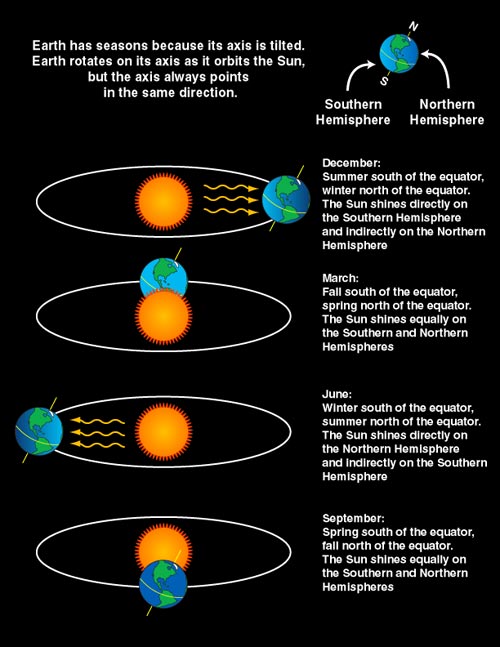
tilt of the Earth axis
and the
ellipticity of the
Earth's orbit
around the Sun.
At the solstices,
the Sun will appear at the top or bottom of an analemma.
The featured image was taken near the December solstice and so the Sun appears near the bottom.
Equinoxes, however,
correspond to analemma middle points -- not the
intersection point.
In two days there will be an
equinox ("equal night"),
when day and night are equal over all of planet Earth.
Many
cultures celebrate a change of season at an
equinox.